
The History of Beema Mosque and the Syncretic Culture It Nurtured
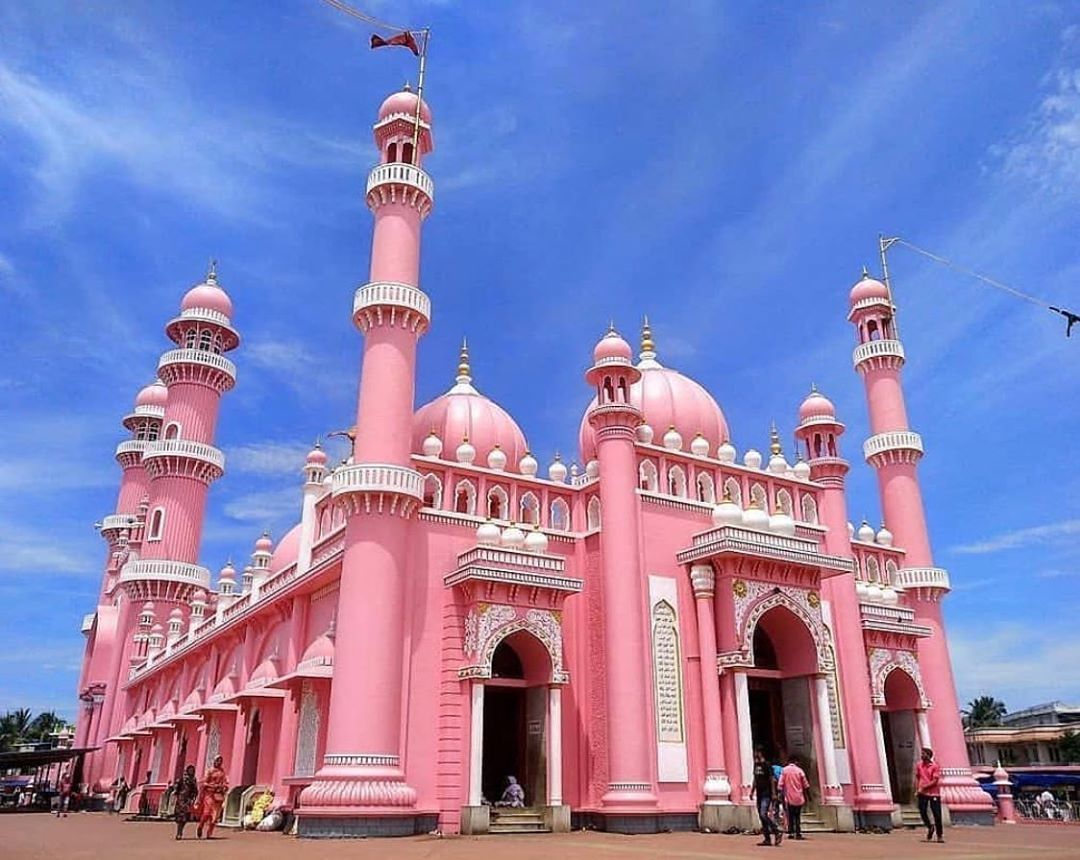
The legend of Beema Beevi and her legacy is nearly as foundational as that of Cheraman Perumal in the history of Islam in Kerala. The renowned Beema Mosque, standing in the heartland of the Trivandrum district, possesses a long, beautiful history wherein modern conceptions of boundaries blur. It sheds light on the connection between the spiritual capitals of the Muslim world and the formation of a syncretic culture around the mosque.
The story of Beema Mosque begins in the city of Mecca, where a couple lived: Beema Beevi—believed to be of prophetic lineage—and Abdul Gafar. Beevi was renowned throughout the city for her expertise in Islamic studies, particularly Fiqh (jurisprudence) and Tasawwuf (mysticism). A major intellectual figure in the community, her knowledge drew a large number of seekers to her. Beevi, along with her husband Abdul Gafar, used to invite people to Islam, and many embraced the true religion thanks to the couple. Thus, Beevi was fortunate to spend most, if not all, of her time in the service of Islam.
A few years passed, and the couple was blessed with a son whom they named Sayyid Mahin Abu-Bakr. The boy began his life in the intellectual climate his house fostered. He received his primary education from his mother and excelled in the sciences of Fiqh, Tasawwuf, and Aqida, among others. His parents were an unending, living source of inspiration for him on this path.
Some years later, Abdul Gafar passed away. This came as a horrific shock to both Beema Beevi and her son, Mahin Abu-Bakr. However, setting aside her sorrow over her husband’s demise, Beevi continued the work she had always done.
One night, both Beema Beevi and her son had the exact same dream. It hardly bothered them until the dream repeated throughout the following nights. After deep contemplation, they realized it was a call from the Divine asking them to go among the people of distant lands to invite them to Islam. Without wasting any more of their invaluable time, they set out for India, reached its eastern parts, and began inviting people to the faith.
Beema Beevi possessed the miraculous power of curing diseases, which brought many people to her presence. People would witness her cure their ailments and subsequently embrace Islam. This led to a rapid increase in the Muslim population in the surrounding villages of the subcontinent.
Days and weeks followed until Beema Beevi and Sayyid Mahin Abu-Bakr arrived at Mahe and eventually at Thiruvallam* in the district of Trivandrum. This was a coastal village where most inhabitants belonged to poor families, with a considerable majority being fishermen. Unsurprisingly, Beevi’s power to cure diseases cast a spell of astonishment over the villagers, and many embraced Islam.
The Princely state of Travancore, of which this region was a part, was then ruled by King Marthanda Varma (1478-1528). The King grew jealous of the growing influence of Beema Beevi and Sayyid Mahin Abu-Bakr and sought to control it. He ordered that they pay a land tax for residing in his territory, a decree against which Mahin Abu-Bakr protested.
After a while, Sayyid Mahin Abu-Bakr set out for Mecca to perform the holy pilgrimage of Hajj. Meanwhile, the King tightened his restrictions on Beema Beevi. When Mahin returned from Mecca and heard about the situation, he was enraged. He realized that the wind was blowing in the opposite direction. Opponents gathered against him, leading to a fierce battle between his supporters and his enemies. A number of people died on both sides, including Sayyid Mahin Abu-Bakr. Upon hearing of the tragic death of her son, Beema Beevi became extremely depressed, and within seven days of his martyrdom, she too passed away.
Yet, Beema Beevi and her son, Sayyid Mahin Abu-Bakr, remain symbols of spirituality, dedication, and hard work to this day. Therefore, the people decided to erect a mosque in their memory near their burial place, naming it the Beema Mosque. This mosque is one of the few in the state where people, whether Hindu or Muslim, come to pay visits seeking Barakat (blessings).
One of the major attractions of the mosque is the famous Chandakkudam festival. Celebrated annually, it extends for ten days in honor of the birthday of Beema Beevi. The festival is a prime example of cultural syncretism in Kerala. It features a number of different art forms, including Duff Muttu and others. The most interesting part of the festival is a grand elephant procession accompanied by music using the Panchavadyam (the five musical instruments). An icon of syncretic culture, the festival brings together thousands of Muslims and Hindus, with different programs conducted by each religious group. Leaders of both religions are present at the inaugural ceremony and throughout the event.
The history of the Beema Mosque and the Chandakkudam festival—both representatives of mature cultural syncretism in the state—have brought immense fame and public attention to the region. The mosque continues to be one of the major tourist attractions and spiritual resorts in Trivandrum and beyond, thanks to the wonderful chapters of history it embodies and the syncretic culture it fosters.