
Rebutting the Modernist Critique: Dynamic, Cumulative, Conversational
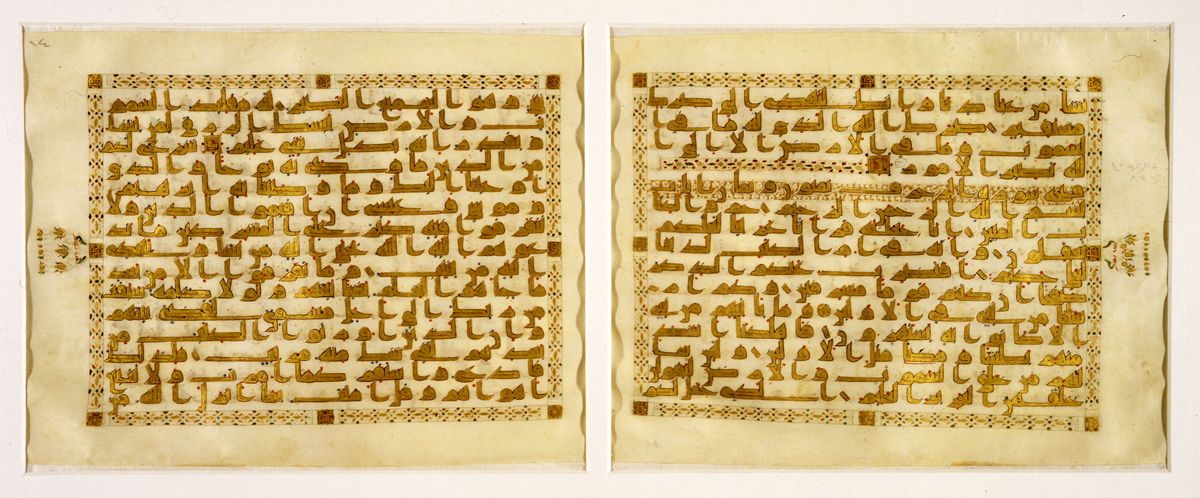
Discover how a single page of Islamic classical text evolved into a massive library of knowledge. Far from mere repetition, this rich tradition of layered commentary spanning centuries transformed dense original works into dynamic generators of meaning, uniting entire civilizations through an ongoing intellectual dialogue.
Islamic classical texts constitute a rich and systematically developed intellectual tradition produced by Muslim scholars over many centuries. These works include various disciplines like theology, jurisprudence, Hadith studies, and Arabic grammar, and are grounded in foundational sources such as the Quran and the teachings of the Prophet Muhammad (PBUH).
The distinctive characteristic of Islamic classical texts is the way they facilitate both the preservation and the comprehensive understanding of knowledge. This methodology is structured around four principal components: Matn, Sharh, Hashiya, and Ta'liqat.
The "Matn" refers to the primary text, which is composed in a concise and condensed style. Because this style can be difficult to grasp, it often requires further description. This is provided through the "Sharh," which consists of further clarification and explanation.
In addition to this, scholars produced "Hashiya," which are marginal glosses written on the Sharh that provide a deeper and more critical analysis of the provided text. Furthermore, "Ta'liqat" refer to brief remarks often contributed by teachers and later scholars, aimed at providing marginal clarifications and interpretations.
The classical period of Islam is generally understood to span from the early second Islamic century (700 CE) through to the end of the medieval period (1500 CE). This was the era in which the foundational disciplines of Islamic learning were systematized, the great canonical texts were composed, and the institutional infrastructure—like madrasas, the waqf, and the ijaza certification system—was established to transmit and sustain them.
Scholars often identify a post-classical period running from approximately 1500 CE through to the early modern era (roughly 1800 CE). This period is often criticized as one of intellectual stagnation, a time when scholars commented on commentaries rather than producing original thought.
Understanding the classical period correctly is essential to understanding textual expansion because the two phenomena are co-constitutive. The classical period is the period in which the great texts were produced, and that expansion gave the period its intellectual character.
This structured, four-layered approach to classical texts has played a key role in the preservation and sustained, continuous development of Islamic heritage.
Expansion of Classical Text
The Islamic intellectual tradition is built on two finite sources: the Quran and the Sunnah. Both are finite; the Quran has a specific number of verses, and the Hadith corpus is bounded. Yet, the outputs of scholars produced from these foundational sources are boundless. Commentary upon commentary, gloss upon gloss, and super-commentary upon super-commentary emerge, until a single sentence from a 7th-century legal text finds itself buried under four layers of classical scholarship.
So the question is: Why do texts grow? Why does a tradition keep producing more?
The answer is that a classical text is not a container of meaning, but a generator of meaning. If a text were merely a container, it would be emptied after reading it carefully once, and the subsequent layers of classical texts would be redundant. But because a text is a generator, its value does not lie solely in what it holds, but in what it produces when a mind encounters it. Therefore, the layering of classical texts is not redundant; it is evidence that the texts are still working.
There are five mechanisms by which classical texts expand, because not every expansion serves the same purpose.
Clarification: The original text is dense, written for an audience that shared the author's context. Generations later, the context has shifted, and words may mean something slightly different. The Sharh solves this by unpacking the compression.
Continuation: A great text poses more questions than it answers. For example, the Muqaddimah of Ibn Khaldun sets out a theory of civilizational rise and fall, but every chapter opens into a dozen unresolved questions. Later scholars continue the thinking not because Ibn Khaldun failed, but because genuinely great thoughts are open-ended. The text expands because it is generative.
Contestation: Not every gloss agrees with its base text; it was a space for argument. For instance, al-Jurjani disagreed with al-Iji's reading of Ibn al-Hajib's legal primer. The margin was where a scholar could say, "I think this is wrong," without publicly attacking the author. The text expands because intellectual life contains disagreement, and disagreement needs a format.
Application: A text written in one political context must be made to speak to another. Commentary was the technology of application. The text expands because the world changes, while the tradition must remain continuous.
Transmission: In the Islamic scholarly tradition, knowledge was not merely read; it was received. The Ijaza system meant that a scholar's authority to teach a text was tied to a chain of transmission. It proved you had truly entered the text, not merely read its surface. The text expands because knowledge in this tradition is an act of relation between minds across time, not merely an information transfer.
The One-Page Text and the Ten-Volume World
The Islamic scholarly tradition is home to a unique intellectual phenomenon: the transformation of a single page of text into a ten-volume world of knowledge. This was not a result of repetition or anything else, but a technology of the mind that allowed scholars to hold a conversation across eight centuries.
The Anatomy of the Page (Structure)
To understand this tradition, one must look at a physical manuscript page. At the center sits the Matn—the original and primary text. These were Mukhtasars (abridgments) written with extreme precision. Surrounding this small block of text are the hawashi, or marginal glosses. Over hundreds of years, different scholars would add their own insights, corrections, and arguments into the white space of that same page.
The Power of Compression
The scholars who wrote these core texts practiced "compression as investment." By writing books so dense that they were almost unreadable without help, they created a seed that required future scholars to water it with explanation. They used specific techniques, such as density without confusion, which involves saying much in little space; calibrated silence, which relies on leaving intentional gaps for the reader to fill; and generative ambiguity, or using words that could be interpreted in multiple valid ways. This approach flipped the modern idea of a book. Instead of a container that simply holds information, classical texts acted as generators of questions.
The Archaeology of Knowledge
Expanding a text was not seen as adding "new" floors to a building, but rather as digging deeper into the ground. Each generation of commentators believed the original text held infinite layers of meaning. Their job was to excavate these layers. This meant that the original text never became obsolete; it remained the center of attention for a thousand years.
Why Expand? The Foundations of the Tradition
This massive expansion of knowledge happened for several deep-seated reasons. On a theological level, based on the Quranic principle that God's words are inexhaustible, scholars believed that human knowledge derived from divine sources must also be infinitely deep. Their epistemological approach valued depth over accumulation; in this system, true brilliance is not to know many things, but to know things more deeply than anyone else had before. Furthermore, there was a spiritual motivation, as seeking knowledge (ilm) was viewed as an act of worship, which provided the drive to continue scholarly work even during times of war or poverty. Finally, there were institutional drivers, because the school system required teachers to prove their mastery by writing commentaries, naturally creating a market for these expanded works.
A Civilization Held Together by Ink
Perhaps the most significant impact of this tradition was political. After the fall of the central caliphate in 1258 CE, the Muslim world was politically divided. However, it remained intellectually united because scholars from different empires were all reading, memorizing, and commenting on the same core texts. The commentary tradition acted as the civilizational glue that maintained the unity of the community across thousands of miles.
Therefore, the movement from a one-page text to a ten-volume library was not merely an act of intellectual preservation, but an act of growth. It turned the act of reading into a timeless, communal journey toward truth.
Taxonomy of Expansion — The Four Genres
The four genres of textual expansion are not merely filing labels for the cataloging of manuscripts; they are intellectual choices. When a scholar decides to write a Sharh, a Hashiya, a Taliqa, or a Takmila, they are not only writing an explanation, but also relaying a statement about their relationship to the text, to the tradition, and to future readers.
The genre of a commentary is the author's answer to the question: "How close should I stand to this text?" Each genre represents a different theory of where intellectual authority lies. The Sharh places authority in the primary text itself. At the furthest extreme, the Takmila places it in the scholar's capacity to continue the original author's unfinished design.
The Sharh
The word sharh comes from the Arabic root sh-r-h, meaning to open up, to split apart, or to expand. This etymology points to the core intention of the genre: the sharh opens the text from within, splitting each phrase at its seams to reveal the interior reasoning that the original author condensed into a few words.
The mechanisms are specific. A sharh proceeds by quoting the matn and then expanding each unit into a fuller account. The technical term for these quoted segments is the lemma (qawluhu in Arabic, or قوله).
The sharh is a technology for managing the distance between a reader and a difficult text. While a simpler text might reduce difficulty by reducing density, the sharh preserves the difficulty itself because that density is productive. The sharh's task is to ease that difficulty for the reader without making the underlying complexity disappear.
Why are some sharhs considered great? It is because they add something beyond what the original offered, advancing an argument of their own. A primary example is Ibn Hajar al-Asqalani's Fath al-Bari, a commentary on Sahih al-Bukhari. It follows the lemma-by-lemma format and transforms it into a comprehensive jurisprudential, theological, and scientific treatise—all without departing from Bukhari's style. Thus, a great sharh is simultaneously a commentary and a self-portrait.
The Hashiya
The Hashiya is perhaps the most misunderstood genre in the classical Islamic tradition; it has been simultaneously dismissed as a mere footnote and celebrated as revolutionary. In reality, it is neither. Instead, it addresses a specific intellectual problem that no other genre can solve.
Once a scholar produces a sharh (commentary), a new problem arises: the commentator may occasionally misread the author's original text. They might fail to notice an ambiguity, misinterpret a technical term, or misread the author's intent.
This is the problem the Hashiya solves. By writing not on the original text (matn) but on the commentary (sharh), the author of a hashiya can address the commentary's claims directly. Once a commentary becomes canonical, challenging it becomes difficult because it has been absorbed into the tradition. The Hashiya creates a protected space in the margin where disagreement can safely occur, and problems can be identified.
In any long-lasting tradition, there is a constant struggle: the system must evolve to remain useful, yet if it changes too rapidly, it risks losing its identity. The Hashiya solved this dilemma perfectly. It allowed scholars to introduce new ways of thinking without appearing to attack the "sacred core" of the original work.
Ta'līqat
The word Taliqa comes from an Arabic root meaning "to hang" or "to attach". It wouldn't be part of the main body, unlike other types of sharh, which proceed systematically lemma by lemma. Or the Hashiya, which marks specific points in a commentary, and the Taliqa moves freely, attaching itself where the scholar's attention is caught.
The Taliqa works in three ways: the first one is classroom notes which is student writing down what their teacher said during the lesson, and the second one is personal notes which is a scholar's private corrections or thoughts as they read a book, and the third one is a spark of genius which is a quick note capturing a brilliant new idea before the scholar has time to turn it into a full book.
The Takmila
The Takmila is the most under-theorized genre from the four genres of classical texts and perhaps the most philosophically interesting. Where the sharh, hashiya and Taliqa do all work within and around existing text, the Takmila does something structurally different. It completes a text that was left unfinished. The Takmila author steps into the space left by a previous scholar's death and finishes where it was left.
Al Nawawi left his major legal compendium treatise, Al Majmu, unfinished. Several later scholars wrote takmilas, most famously al Subki. Writing Takmila is very difficult because the new author must hide their own style and voice. They have to write exactly what the main author wrote, following their specific methods and logic.
This tradition is more than just fame or academic; it is a moral act. The scholar who writes a Takmila decides that finishing a great master's work is more important for the present and future community than writing a brand new book of their own. It is an act of "scholarly love" where the needs of the tradition come before the desire for personal fame or originality.
Muntasir Zaman and the Modern Debate
Muntasir Zaman's article "Much Ado about a footnote," The Development and Function of the Hashiya, is the anchor of contemporary scholarly engagement with the commentary tradition. Its title itself is an argument. By invoking the phrase "Much ado about footnote," it signals awareness that the tradition under study has been dismissed as trivial and it is time to announce that this dismissal is wrong.
The Modernist Critique
All the modernist critique was related to Muhammad Abduh, whose time at Al Azhar gave him intimacy with the tradition he would come to criticize. For Abduh, the hashiya-filled shelves of Al Azhar were evidence of a tradition that had turned in on itself, producing commentary on commentary instead of engaging with deeper interpretation and challenges of modern life. And students are reading and studying only the commentary and commentary on commentary rather than dealing with the legal principles of the primary text.
This critique has power because by the 19th century, something had gone wrong. A student who could parse a fourth-degree gloss on a legal primer might not be able to derive a fatwa from first principles when confronted with a genuine novel question.
The Rebuttal for the Modernist Critique
The hashiya was not circular, but a cumulative process. Each generation of scholars used the margins of these books to deposit new problems, contemporary answers, and local contexts.
A powerful example is Al Baydawi's Tafsir. Over 6 centuries, more than 300 hashiyas were written on this single text. Rather than being a sign of laziness, this showed a remarkable "Collective Intelligence" for 600 years. The greatest minds of the Ottoman, Mughal, and Safavid empires were in a continuous conversation with one another through the lens of a single central text. The format remained static, but the content was dynamic.
Limitation of Modern Critique
Modern critique was limited because it blamed the format of the books when it should have blamed the attitude of the people using them. There are three main reasons why this critique is now seen as incomplete.
Confusing the style with the spirit: The modernists believed that the hashiya was the reason that the scholars stopped thinking for themselves (Taqlid). However, modern scholars say the format was just a symptom, not the cause. The real problem was the shift from Ijtihad to Taqlid. If a brilliant thinker writes a commentary, they use it to argue, improve and innovate. If a lazy thinker writes one, it becomes a boring repetition. The hashiya was simply a tool; the problem was that the people using the tool had lost their creative spirit.
Overlooking real progress: The modernists argued that the centuries before them were a time of intellectual death. However, new research shows this isn't true. Even in the 1600s and 1700s, great scholars were doing incredible work. For example, Mulla Sadra in Iran used the commentary format to introduce revolutionary ideas in philosophy. These scholars were not just looking backward; they were using the old texts as a foundation to build new intellectual skyscrapers. The decline the modernists noticed happened much later and was much smaller than they claimed.
The modernist critique was itself shaped by European assumptions about what it means to be smart — that you must write a brand new book (Monograph) — and the reality is that just because Europeans liked newness doesn't mean that the only way to be intelligent is to write a new one. Writing a commentary is simply a different way of thinking.
Conclusion
The classical Islamic tradition is not a static monument, but a dynamic, living organism. While monuments remain unchanged, organisms survive through change. They grow, adapt, and metabolize their environment. In Islamic scholarship, new knowledge is metabolized through the expansion of classical texts.
This textual expansion is marked by three civilizational crises. First, the Mongol destruction of 1258 intensified the tradition. Scholars under Mamluk patronage responded to physical rupture by deepening engagement with texts, providing cultural continuity. Second, colonial encounters of the 18th and 19th centuries brought epistemological displacement, challenging how Muslims processed knowledge. The tradition responded by migrating into reform treatises, journals, and tafsir. Finally, the present crisis involves maintaining coherence in a globally dispersed digital Muslim community. Once again, the organism adapts through scholarly networks and digital transmission.
As manuscript cultures fade, the hashiya tradition faces a continuity crisis. However, rather than abandoning it as a dead artifact, we must treat the tradition as a living body by applying its patient, layered, and conversational commentary to modern challenges.