
Role of Islamic Values in Promoting Peace, Justice, Human Rights and Conflict Resolution
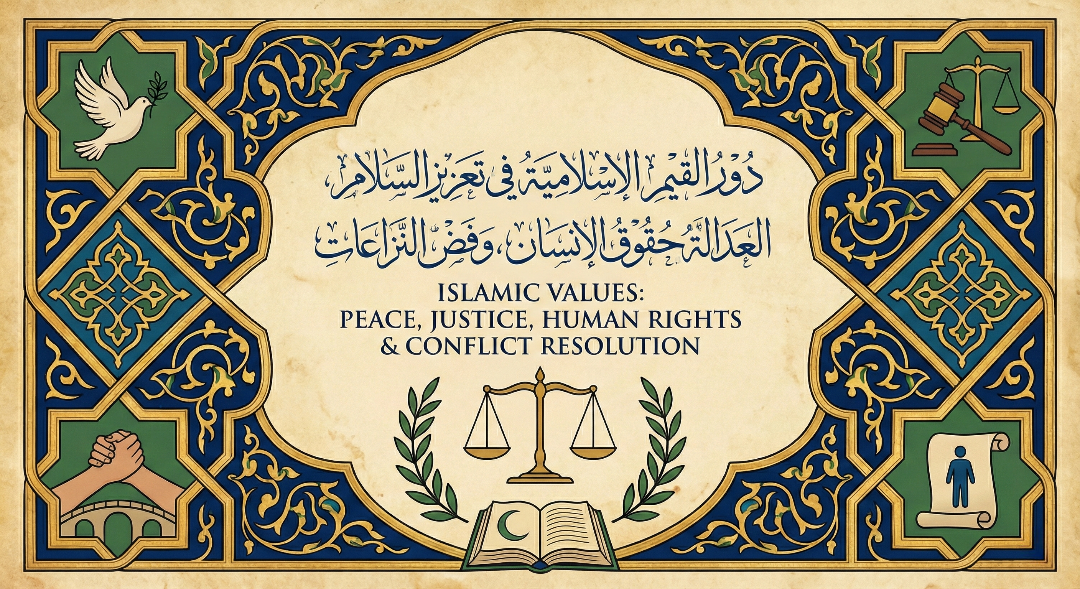
An analytical overview of how Islamic teachings historically shaped fair governance, human rights protection, and peaceful conflict resolution in global societies.
In the contemporary secular world, religions, especially Islam, are being criticized in many ways and in many countries. However, the world strives to form a sustainable society in all social, environmental, and economic fields. Unfortunately, the world has not recognized that Islam explained clearly how a sustainable society can be formed centuries ago. A just and peaceful society is important to achieve these Sustainable Development Goals. This is the reason why Sustainable Development Goal 16 is so important.
The term peace here focuses on the absence of war and the presence of justice, while conflict, on the other hand, refers to confrontation and clashes of interest. Human rights refer to the rights that belong to every person. But how is peace being challenged in the world? The denial of justice by leaders and discrimination based on caste, creed, color, or religion are major challenges to peace. They deny fundamental rights like the right to equality and lead to violations of human rights.
So, how does Islam form a just society? How can Muslims contribute to it in the contemporary world where Islam is often undervalued?
The statement that Islam can form a just and peaceful society is completely true, and we can understand this from history itself. Islam spread light to a society where conflict lasted for generations through its values of Al-Adl (justice), Sulh (reconciliation), and Tahkim (arbitration). Problems such as discrimination were solved through these advocacies.
For example, Sayyid Umar bin Khattab (R.A), the second Caliph of the Islamic Caliphate, was so just in his governance that even Mahatma Gandhi is said to have expressed his wish for a rule like Umar’s in India. Everyone was treated as equal citizens without discrimination. This led to a peaceful and just society where human rights were upheld equally for all. This is Al-Adl, or justice.
The Qur’an also promotes justice. For example, the 135th verse of Surah An-Nisa says:
“O you who have believed! Be persistently standing firm in justice, witnesses for Allah, even if it be against yourselves or parents or relatives.”
Another important advocacy of Islam is Sulh, or reconciliation, which means restoring friendly relations. This peace-making method was used by Prophet Muhammad (P.B.U.H) in treaties like Hudaybiyyah. Many wars in history ended as a result of reconciliation.
This advocacy can be divided into two: Wasta (mediation) and Tahkim (arbitration).
Wasta means making peace by appointing a mediator from each side. The Qur’an states:
“If you anticipate a split between them, appoint a mediator from his family and another from hers. If they desire reconciliation, Allah will restore harmony between them. Surely Allah is All-Knowing, All-Aware.”
This was reflected in Hudaybiyyah where both parties had representation. Islam succeeded in Wasta because it respected both sides and valued peaceful solutions.
Tahkim, or arbitration, means involving a neutral judge not connected to the conflict. Islam has followed this since its beginning, with Prophet Muhammad (P.B.U.H) acting as a judge among his companions. As a result, the Qadhi (judge) system emerged. Although judging existed before Islam, Islam strengthened it and made it more just, influencing the development of contemporary legal systems.
Islamic civilization also established institutions such as Zakah and Waqf, which ensured social welfare and basic needs for all.
However, the current Muslim society faces many challenges from the world. The main cause behind these issues is the false connection of terrorism with Islam. Some individuals with Muslim names have engaged in violent acts, which were often influenced by political powers like the USA, but these individuals do not follow Islamic teachings. They are not representatives of Islam.
Muslims today can still contribute to forming a just and peaceful society by making others understand Islamic values and advocacies — as scholars like Mehdi Hasan and Ahmed Deedat have done.
In conclusion, Islamic values and advocacies have a significant role in creating a just and peaceful society and in fulfilling the world’s Sustainable Development Goals. Despite the challenges Muslims face today, they can contribute towards justice and peace by helping others understand that Islam does not promote terrorism — it promotes peace, justice, equality, and human dignity.