
Between Revelation and Reality: The American Quran as a Mirror of a Nation
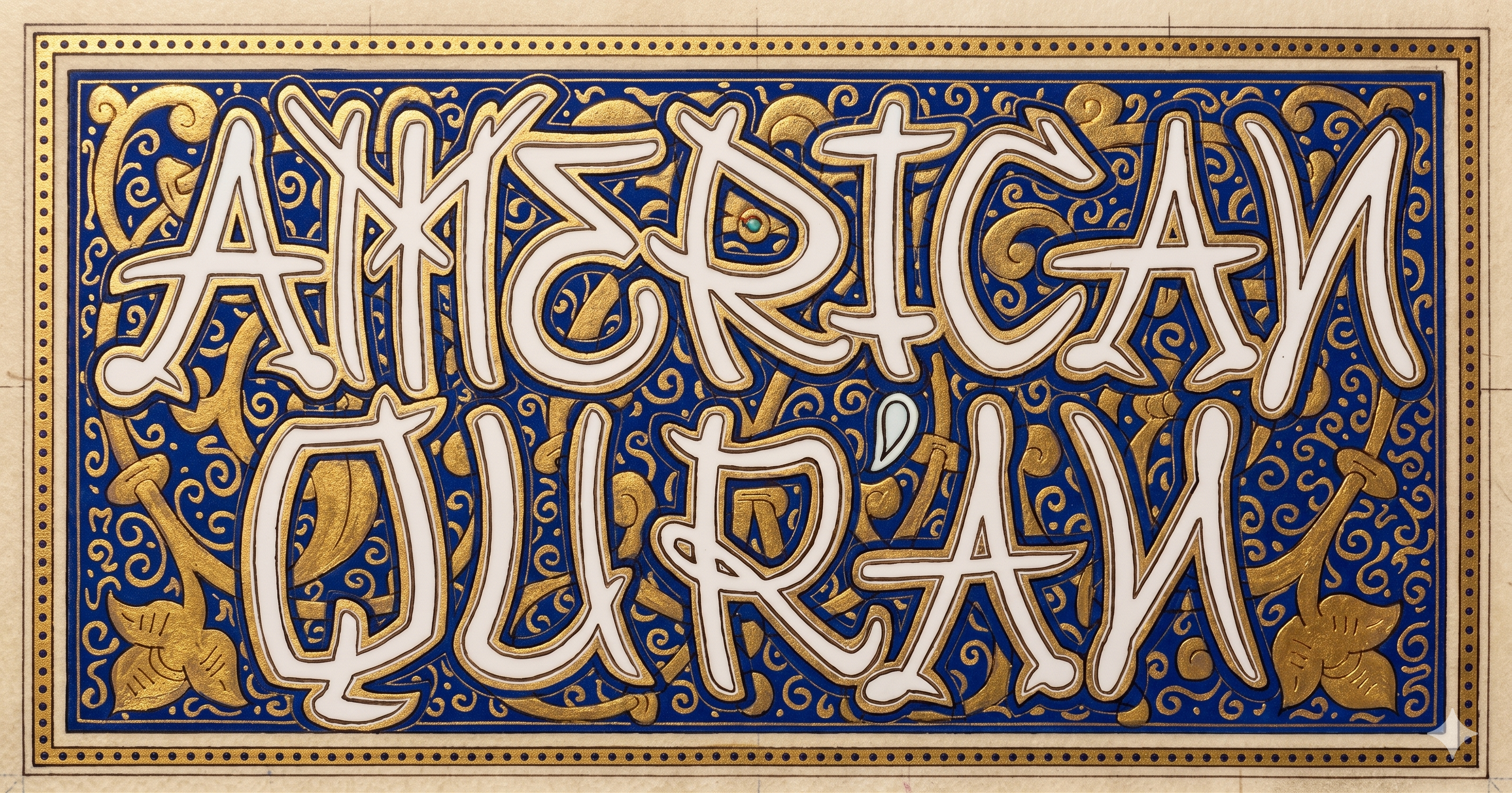
The world has witnessed an abundance of religious symbolic interactionism through various kinds of sacred texts over the centuries. In Muslim society, the Holy Quran stands on the shoulders of giants in its credibility, accountability, and acceptance. The Quran, apart from being a religious text, has influenced many revolutionary figures to convert to Islam, such as Malcolm X, Muhammad Asad (Leopold Weiss), and Hamza Yusuf (Timothy Winter).
Recently, a new illustrative approach to Quranic interpretation has made our generation increasingly drawn to a unique artwork — more than an artwork — created by Los Angeles-based artist Sandow Birk (born 1962), who has paved a new way of perceiving the Quran in an illustrated version simply titled American Quran. What makes this work more profound is the era in which it came to light: a climate in which controversies surrounding the fallacies embedded in literal translations of the Holy Quran risked leading to a shallow understanding of its rhetorical richness and the deeper meaning of God's revelations. Compounding this challenge, the Quran was originally in Arabic, which created further complications in the narratives around translation. A Fulbright scholarship laureate, Sandow Birk focuses his work on themes of contemporary issues revolving around war, peace, and social justice — topics that are deeply communal in nature. American Mihrab is one of his seminal works: an ATM machine-shaped artifact bearing a complete resemblance to the mihrab found in Muslim mosques. Both thresholds of the mihrab are carved with the sacred verse citing "be just and fair," calling on the American people to be patrons of truth and justice.
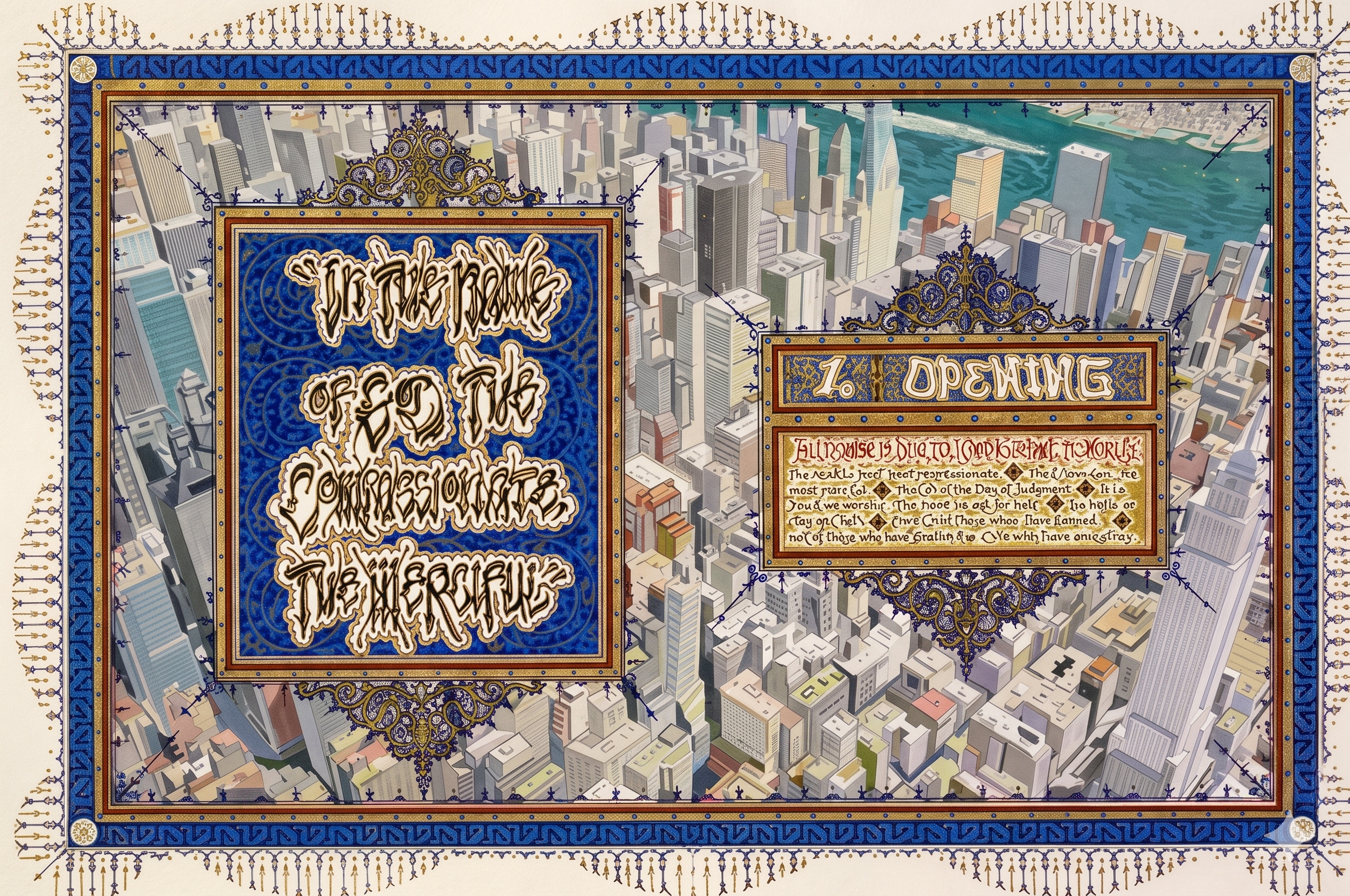
The American Quran addresses the American community of the 21st century, where the credibility of actions and intentions is constantly questioned. Rather than merely drawing connections to the social circumstances of American life, it delves deeply into the tangible aspects of daily existence that matter most. Birk endeavors to intertwine each verse of the Quran with the daily lives of American citizens. What inspired him to undertake this project was the moment his eyes fell upon an illustrated Quran exhibited at the Chester Beatty Library in Ireland; he then realized that his country needed a project capable of exposing the misunderstandings about Islam, a necessity for his community's identity. The work was fully completed in 2015, and for this purpose, he visited numerous nations across Asia and Africa. Sandow Birk steps into a space where previously only calligraphy and the rhythmic recitation of the Quran were known. His venture to produce an Arabic-English visualized translation transforms a fusion of eclectic skills into art. He did not merely create a new art form but devoted himself to it, manuscripting it entirely by hand. Blending two artistic traditions — Arabian and American — he forges a unique fusion. In place of traditional scripture lettering, American urban graffiti-style characters are used.
Courtesy
Sandow Birk
Islam on web
Muhammed Fayiz