
Grace Beside the Still Waters
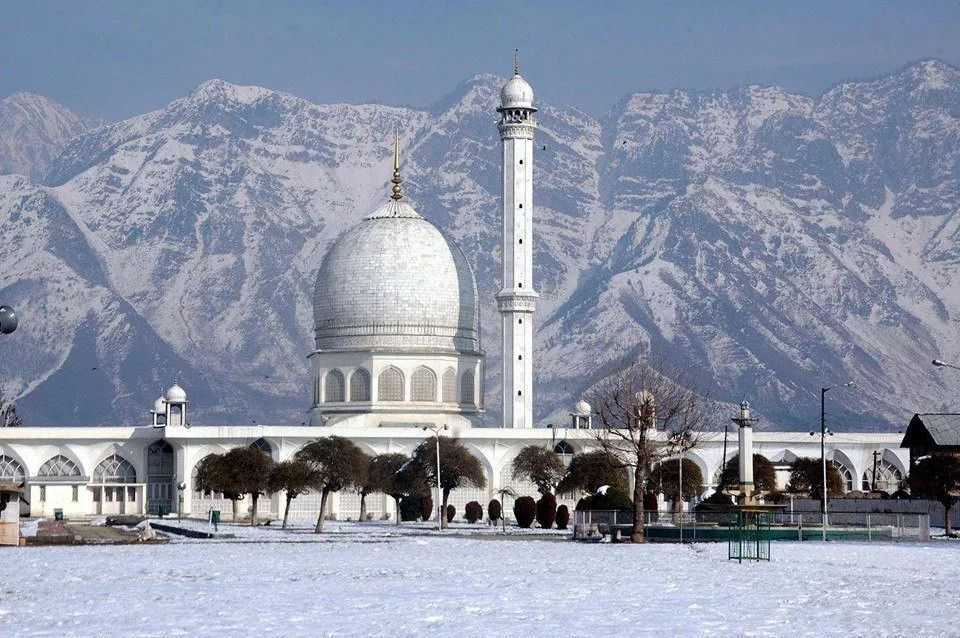
A research trip to Srinagar’s Hazrath Bal shrine unfolds into a profound encounter with faith and history. From the sacred origins of the Moi-e-Muqaddas to a poignant lesson on reverence from local scholars, this report captures the "Second Medina." Experience the spiritual tapestry of Dal Lake, where centuries-old Mughal architecture meets the pure-hearted hospitality of Kashmir.
For around a century, India and Pakistan have been participating, rivalling, and even fighting for a priceless prize in an endless tug of war. The land which people feature as the only heaven on earth, whitened in winter and coloured in spring, Jammu & Kashmir. The beautiful 10.4 million acres, filled with fluffy snow and sweet apples. But even today, the holy land of India suffers from numerous terrorist attacks, internal conflict, and social criticism. In truth, those who have travelled to these places cannot accept this political propaganda with which politicians try to obscure their selfish, perfidious political agendas.
We eight bachelors packed our luggage to enjoy, to experience, to live a life whose moments we could never recreate. We started our journey on February 08, 2026, and it lasted 18 days of memories. We reached Jammu Tawi after covering the cultural cities of Rajasthan: Jaipur, Jodhpur, Jaisalmer, and Ajmer. We arrived in Srinagar (the summer capital of Jammu & Kashmir) on 17th February. In truth, the very essence of travel is not the plan, but the people with whom you are. Our trip crew was something remarkable; with an astute financial manager, some trip planners, and two bargaining fellows.
We planned to cover Srinagar city after we arrived. If we speak of Jammu & Kashmir, we cannot exclude the people of Kashmir. The people of Kashmir did not treat us like tourists, travellers, or foreigners. But they treated us as though we were their cherished guests. We had an experience when we reached Srinagar at midnight, around 2 o’clock, in our shared taxi, we shared with three Keralites who had planned to take a package of “Malayalies”. At the time we arrived, we had no plans to survive in that shivering, ice-cold environment. We asked our “Malayali” brothers for help to find some shelter. But our brothers tried to deal at a huge rate for their package. We refused. Then asked for a room, but they said: ‘You eight people cannot share a single room, you have to take two rooms, and each person will be charged about 400 rupees; in Kashmir you cannot find it; if you do find it, you have to inform us.’ We all knew that they were cheating us, because we did not know anything about that land. We repudiated their mendacious way of dealing. So, they (Malayali Brothers) expelled us from their package centre and behaved in the worst manner. After some minutes, some Kashmiris came and gave us a room, charging only 150 rupees for each, with a spacious, comfortable room.
Way to Hazrath Bal Mosque
The Hazrath Bal shrine, also known as Dargah Hazrath Bal, is a mosque which is located in the Hazrath Bal area near Srinagar city. The mosque is situated on the northern bank of Dal Lake, regarded as one of the greatest spiritual sites of Jammu & Kashmir. We reached the mosque before the Zuhr prayer. We wandered without examining any single thing about it, we only saw some shapes of buildings, praying worshippers, and small minarets and domes. The main cause of this unintentional wandering was the shortage of time for covering the whole of Srinagar city. But I was not satisfied with that topsy-turvy decision. My heart felt broken, my eyes started raining, but I concealed my feelings at that time for the sake of the next move of my fantabulous comrades. At night, I aired my troubles and disappointments to my friends, who had just passed through history without researching, studying, and investigating the heritage of the mosque — how had this mosque become such an important spiritual spot in India? Why do people give this much prominence to this mosque? There were many questions that should be answered.
When I informed my team about this vast omission, they understood the problem and said: “Oh dear, you enlightened our minds; if you had not reminded us —we swear by Allah— our trip would have become void”. Around that time, Ramadan had begun. We planned to visit Hazrath Bal mosque again for research purposes only. We arrived at a decision: on the coming Friday, we would break our fast at Hazrath Bal mosque without any doubt.
On 20th February, after Juma prayer, we resolved to reach the mosque and break our fast there. When we reached, we found an old man praying with tears flowing in his eyes. We inquired about him and learned that he was a Kashmiri who lived near the mosque. In the next instant, I eagerly asked about the history and evolution of this mosque. The old man began in his broken Hindi. “My children, may Allah give you His paradise”. He continued: if we speak of this holy mosque, we must recall its whole history and why this mosque is so important. He described the etymology, history, and many incidents about the mosque. At that solemn moment, I sincerely thanked Almighty Allah for bestowing upon me the golden opportunity to study in the Darul Huda system.
He said that the name ‘Hazrath Bal’ was the combination of the Arabic word (Hazrath) and the Kashmiri word (Bal), meaning the ‘Respected Place’. According to some Muslim scholars, this mosque is named ‘Hazrath Bal’ because the Moi-e-Muqaddas (holy hair of Prophet Mohammed [PBUH]) was housed in this mosque. According to this account, the word Hazrath Bal is completely in the Urdu language, meaning (The Holy Hair). He continued, the shrine was established under the patronage of Inayat Begum, the daughter of Khwaja Nuruddin Eshai, who was the custodian of the holy relic. The earliest structure of the mosque was constructed in the 17th century by the Mughal subedar ‘Sadiq Khan’ during the reign of Shah Jahan. The building was initially called ‘Ishrat Jahan’, then converted into a prayer hall in 1634 C.E by the order of the emperor. The present structure’s construction began in 1968 and was completed in 1979. According to traditional accounts, the relic was first brought to Kashmir by ‘Syed Abdullah Madani, a descendant of the Prophet Mohammed (PBUH). He left Medina and settled in Bijapur (present-day Vijayapura in Karnataka) in 1635 C.E during the period of Mughal expansion. Following his death, the relic was inherited by his son, Syed Hameed. After the Mughal invasion, he lost his estates and transferred custody of the relic to ‘Khwaja Nuruddin Eshai’, who was a Kashmiri merchant.
The Mughal emperor Aurangzeb knew about the existence of the holy hair of the Prophet and ordered the transfer of the relic to Ajmer, where he placed it at the shrine of Khwaja Moinuddin Chishti. At the time, Eshai was imprisoned in Delhi. According to some traditional records, the Prophet Mohammed (PBUH) and his four Caliphs appeared in the dream of Aurangzeb and ordered him to return the relic to Kashmir. Meanwhile, Eshai had died in prison. So, the emperor sent the holy relic and Eshai’s remains to Kashmir. There, Inayat Begum (daughter of Eshai) took the responsibility of the relic and built the ‘Hazrath Bal shrine’. Then, the custodianship of the relic has since remained with her male descendants, known as the ‘Banday Family’.
The holy hair is displayed to the public only 10 times a year: Eid ul Fitr, Eid ul Adha, Ashura (10th Muharram), Milad- u -Nabi (Birthday of the Prophet), and the following Friday of Milad. We heard a rumour that the relic display that it would be shown on the first Friday of Ramadan. But, when we asked about it, one of the natives revealed that it was false, and the ‘Holy Hair’ would be shown on the 21st of Ramadan. We were all downcast, and our faces drooped like the touched ‘Mimosa Pudica’. On that occasion, my friend recalled the words of our teacher, that when he visited this holy land with his colleagues, they requested to display the holy relic to them. At last, the authorities showed it to them. Heartened by this account, we also requested politely, but their answer was “No Way”.
The Mosque is surrounded by plenty of beautiful gardens, parks, and even playgrounds for children — this is the remarkable difference between our and their social behaviour towards children. In the evening, we wandered near Dal Lake (back gate of the mosque) and sat in the garden. People were sitting, eating, and chatting along that shore. After our group photo with the mosque, we saw two Kashmiris sitting and talking to each other. I went to them, introduced myself, and started talking. We learned that they were both well educated in Islamic studies and modern education. One of them was a Mufti (Muslim legal expert) and the other was his companion. They spoke about current affairs, problems, and solutions to the modern problems of Muslims all over the world. At that time, one of my friends spat on the ground. When they saw the action of my friend, their fair, snowy faces turned as red as apples. The mufti said with palpable anguish: “My brother, how dare you spit on this ground when the ‘Holy Hair’ of the Prophet is behind you, did you know? This area is known as the ‘Second Medina’ of the Prophet (PBUH) — were you even trying to disrespect this holy land?” he continued. At the same time, we all apologized for my friend’s wrongdoing. By this incident, I received the answer to my question: how the people of Kashmir revere this place, and how much honour they bestow upon this sacred site.
Finally, we strolled through the Hazrath Bal town, where there was a Friday market akin to our Tirur Friday market. Kashmiri foods, sweets, clothes, and traditional vessels were sold at cheap rates. People were buying, bargaining, and selling their goods. The inexplicable experience is that there was no violent situation, no chaos, no troubles — people with pure hearts and noble behaviour will make everyone a lover of Kashmir.