
Democratizing Literature Through Graphic Memoirs: A Reading of Marjane Satrapi's Persepolis
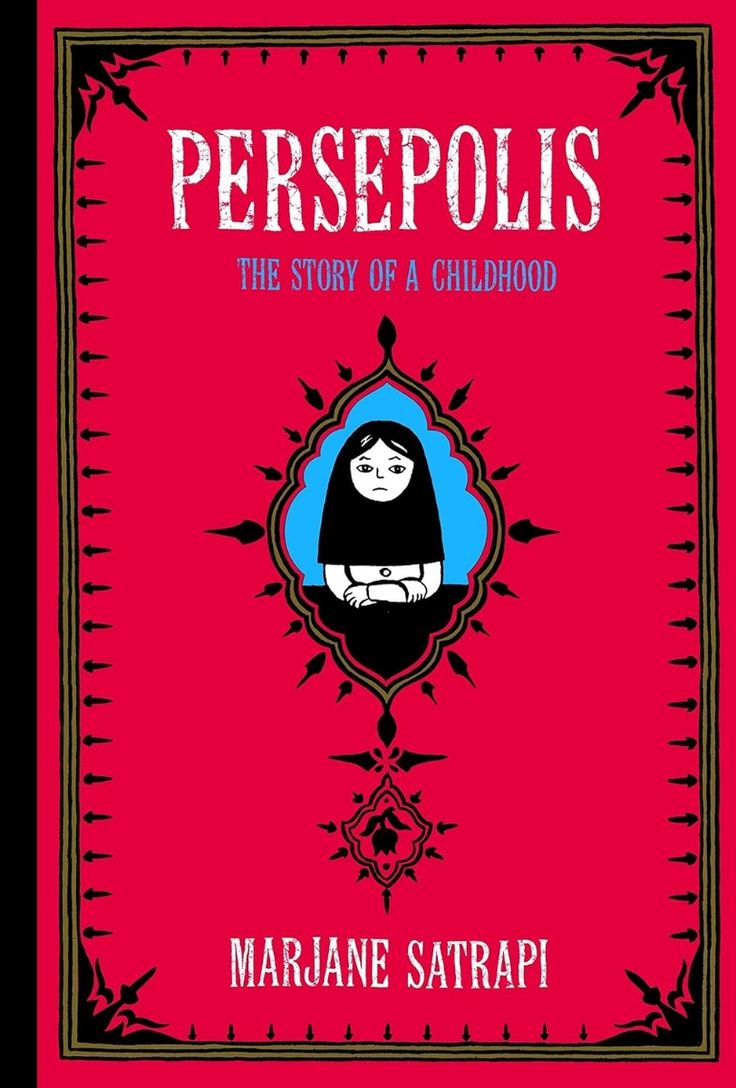
Marjane Satrapi is an Iranian graphic novelist who blended her personal experiences into historical events, creating a more innovative approach to memoir writing.
Baatein nahi, sirf karke dikhayenge, no discussion, only demonstration.
This is a famous dialogue from the recently released Indian period drama series, Made in India: A Titan Story. As per the phrase mentioned above, in the complexities of our lives, sometimes there is no need for a discussion; some demonstrations are enough. To visualise our ideas, depict them in a worldly manner, guaranteeing everyone's immersion.
Since my teenhood, most of the friends have put me behind the curtain for not being keen on the aesthetic world of comics and Manga, whatever it is, even though I am not a Picasso in those fields. Then I started to read extensively about the emergence of comics, and relevant AI bots showed me how much the comics and graphics helped shape the reading mentality of children and adults simultaneously. In the early times, comics were printed in newspapers and considered "Light reading," and it is. From the 1970s onwards, apart from a "A blink, read and next page", comics started to turn the tables against the atrocities poured by the power blocs that ruled each province, beyond languages and cultures. The comics started to illustrate the real-life struggles every ordinary man faces. So eventually, it began an era of "Democratizing literature", which gave a voice to the marginalized communities to rise against the hurdles being put forward and tackle them. Literally, comics were an undisputed combination of words and graphics that make complex ideas served in a milk bowl as simple as a kitten can lap. This gradual development encouraged creators to focus on the graphic novel, a long and sophisticated work emphasizing politics, identity, trauma, wars, and so on.
Let me come to the point, while I was embedded in the shackles of social media platforms, a unique name got my attention, an Iranian one. Being a curious person with some peculiar habits, I love unique names. Whether it is about a person, place, thing, or creature, it has a profound effect on me. The post showed: Graphic novelist Marjane Satrapi, 1969-2026. I couldn't get my eyes off the name. After I put my phone away, a cool breeze came through the left window of my room, and pisthurism reverberated in my ears. Through that humming, some inner voice compelled me to check on that artist, (And don't tell anyone, I was an artist in my early ages and was very passionate about it. Don't know why the sparks got quenched.) I searched and read her bio briefly. Then, as usual, peeked through the web browser about her most famous work, which showed me Persepolis, literally meaning the city of Persians, derived from the Greek words Pérsēs = Persian and pólis = city. I thought it would be a novel or some kind of memoir. But what astonished me, it was none. A graphic memoir communicating with the linear sketching and normal font text. No chat bubbles, no colour grading, just simple and elegant as it is meant to be. As every reader does, I dug up some reviews and thoughts about the work initially, then stopped my eyes on the downloaded PDF file from their website. The cover of the graphic novel put a smile on my face: A small girl sitting on a bench, covering her head with a scarf and wearing a "ewhh" expression on her face. Persepolis, the story of a childhood. The story went on; so did I. For god's sake, I am so grateful to the late, respectful Marjane Satrapi for her childhood remind me of mine, for how much I was blessed to have a homeland without war sirens every minute, without having a homeland that's being torn apart for the imperialistic-inspired autocracy, for having a homeland that can be called a "Homeland" in every sense.
Unfortunately, I ask pardon from all the readers in the universe for how stubborn I am, not finishing the work within one day! Pardon me! I think it took 3 or 4 days for me to complete the whole book. Then I realised the work was translated into English in 2004, and it also has a sequel. Hurray! A new addition to the reading list. Within a split second, I became Marjane Satrapi for a lot of moments (it's a request, please don't bring up the topic of gender non-conformity), bearing each and every fragment of her pain through my heart and veins. Calling out to God in the midnight, while everyone was asleep. Being a woman prophet (in her imagination) had my attention; she even had her own rule book, including a childish but not to be overlooked six rules. And I forgot to tell, the whole memoir surrounded the Iran revolution and post "apocalypse", for Satrapi it was. She remembers Shah's claim during the ascension of the throne: I am the light of the Aryans, I will make this country the most modern of all time. Our people will regain their splendor.
Alas! They never did under his reign. And after that, a bunch of fundamentalists ruled there; it wasn't ruling; it was oppression, compulsion, and torture in the name of a holy religion.
Once Satrapi mentions her favourite writer, Ali Ashraf Darvishian, metaphorically comparing as the local Charles Dickens. She meant it.
Through her surrealistic journey, I understood one thing: why she was obsessed with Charles Dickens this much, it was the Social Class struggles that were reflected vividly in his works. Maybe that's why she wrote, "The reason for shame and revolution is the difference in social hierarchy".
Apart from a 12-year-old child, she tried to be part of the protests and the revolution; she liked boasting about the heroic achievements attained by her family members during martyrdom. That made her a stiff and rogue lady against the injustice shown towards her and her own people.
After the 1979 revolution, then US president Jimmy Carter didn't give a homage to the exiled Shah, but drastically Anwar Al Sadath of Egypt accepted him with open arms.
Her pain didn't get a painkiller; it piled up. To a man's height, to a date tree's height, to the height of World Trade Centre buildings (Sarcastically). After attacks and attacks, there comes the Iraq invasion, thundering sounds of F-14s. MIGs are covering the whole region of Tehran with bombardment.
The war didn't end with missiles or massive massacres. It struck the markets and the daily lives of ordinary people. Lack of efficient household items led to the rage of a community towards their own people. Fighting for a pack of bread painted the black and grey image of war. The utmost form of selfishness was rooted in their mind.
In one of her chapters, she mentions the attack on the oil refinery and the turmoil faced by her father due to the lack of gasoline that's needed for his car to be functional again. This adage by Samuel Taylor Coleridge suddenly glitched through my creepy mind: "Water, water, every where, Nor any drop to drink."
What saddened me the most was the irony about how the students of every school needed to endure the unending humiliation and pain of being thrown into the cruel hands of a filthy army for the obligated so called sacred rite of compulsory army service. Day by day, wailing sirens began to ring twice or thrice a day. Satrapi wimps about it, "They lined us up twice a day to mourn war dead!" How inhumane they are, God!
Every parent in Iran had this thought: what if my child gets trapped in a labyrinth of suffering, where escape is quite impossible!?
Like everyone, Satrapi's parents were also worried about this nightmare. So they decided to send her to Vienna, where she could get an adequate education and live without being afraid of anyone. In the last moments of her life in Iran, while her teenage years began to fall apart, she spent her last night with her Grandmother. That wasn't just a night, it was a dais of pledge, a battlefield of a "One-Woman" army, a new chapter being added to Tabula Rasa. Because for her, tomorrow is going to be different from today. Her Grandmother whispered in her ears: Don't forget who you are. She replied, slipping into the coziness of sleep: No, I won't ever forget it.
After completing the work within a short span of time, I get why the work was banned in Iran, and the US accused the work of including violent images and anti-government views, I don't think so. But unfortunately, banning didn't end the rebel mentality of adults and teens; they kept reading and buying through the black market or any viable way they could, and the demand for Persepolis rose from time to time. Later released as a motion picture. The hard work paid off.
As a continuation of my curiosity, I slightly searched for other Graphic memoirs that created abrupt acceptance among readers. Web browsers ended up with three names: Maus by Art Spiegelman, Fun Home by Alison Bechdel, and Persepolis by Marjane Satrapi. These are the giants of graphic memoirs. Surely Satrapi's Persepolis stood on the shoulders of giants, maybe a Goliath among other Goliaths.